Get reliable pest information and explore our recent works, showcasing safe and effective solutions for homes and businesses.
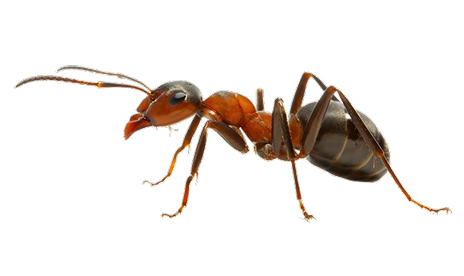
Several ant species are particularly well-adapted to our environment. Identifying which type has invaded your space can help you understand their behavior and the best control methods
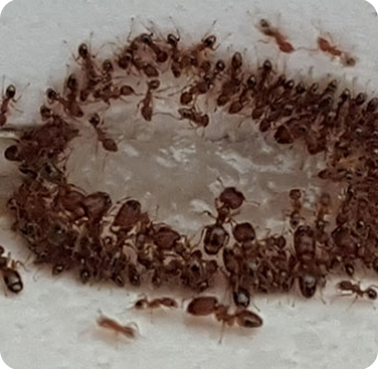
These tiny, pale ants are often found in kitchens and bathrooms. They form large colonies and are attracted to sweet food. Ghost ants typically nest in wall voids or behind skirting boards.
Pharaoh ants are yellowish-brown and known for nesting in warm, humid areas. Their colonies have multiple queens, making them difficult to eliminate. They often invade hospitals and food handling areas.
Unlike termites, carpenter ants don’t eat wood but hollow it out to build nests. They are larger than other species and can cause structural damage over time.
Named for their erratic movement, crazy ants are reddish-brown and tend to infest electronics and wiring. They are highly invasive and hard to contain once inside.
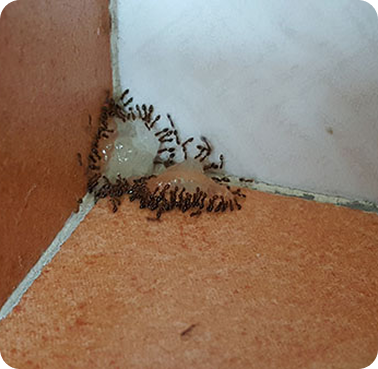
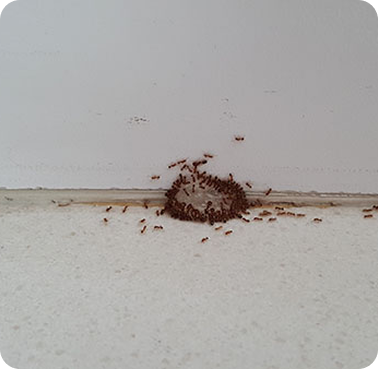
These ants are drawn to sugary spills and food waste. They are small, black or dark brown in colour and often form long trails towards food sources.
See how we’ve helped clients successfully eliminate ant infestations with safe, effective treatments.
Singapore’s warm and humid climate creates ideal conditions for ants to thrive year-round. Ants require only a small amount of food and water to survive, and our high-density housing often makes it easy for them to access both.
Shared rubbish chutes, open food containers, pet bowls, and gaps around doors or pipes all serve as entry points. Once inside, ants leave scent trails that help others follow, leading to rapid infestation.
Not all ants are easy to spot at first. Look out for:
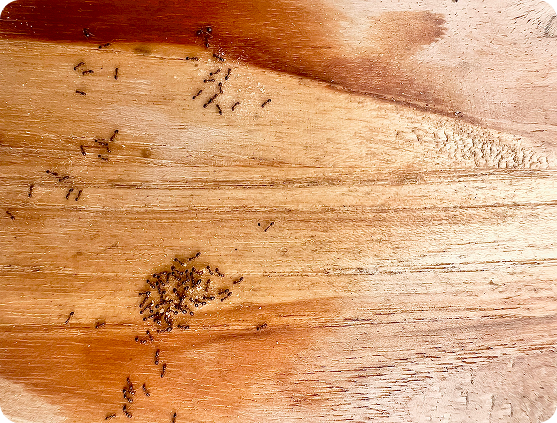
While ants might seem harmless, some species can cause significant issues:
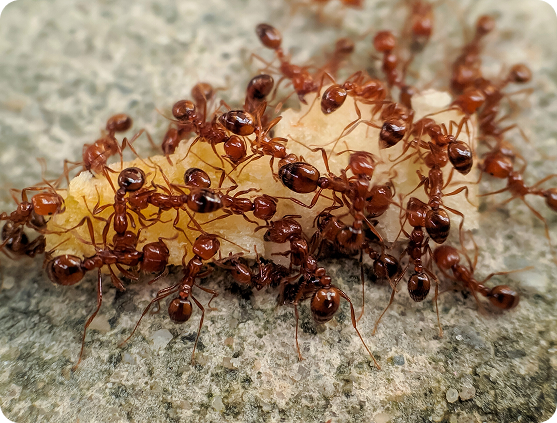
You should act quickly if:
Ant colonies are highly organized and efficient. Most include:
We are a locally established Singapore pest control company serving homes, businesses, and industries. With over 20 years of expertise, our NEA-trained specialists deliver safe, effective, and approved solutions you can trust.
Yes. Vinegar, lemon juice, cinnamon, and chalk are all natural deterrents. However, they work best for minor issues.
We are an award-winning pest control company with over 20 years experience in the business. We provide a wide range of services for residential, commercial, and industrial level clients.